
Sacred Archaeological History of Ethiopia
Modern science has begun to throw new light on Ethiopia’s Christian and ancient past. Two discoveries in the northern region of Tigray show how the country’s written and oral traditions can be set beside the evidence of archaeology. One has been dated by the laboratory. The other is still a claim awaiting proof.
The Garima Gospels: Among the Earliest Illuminated Gospels
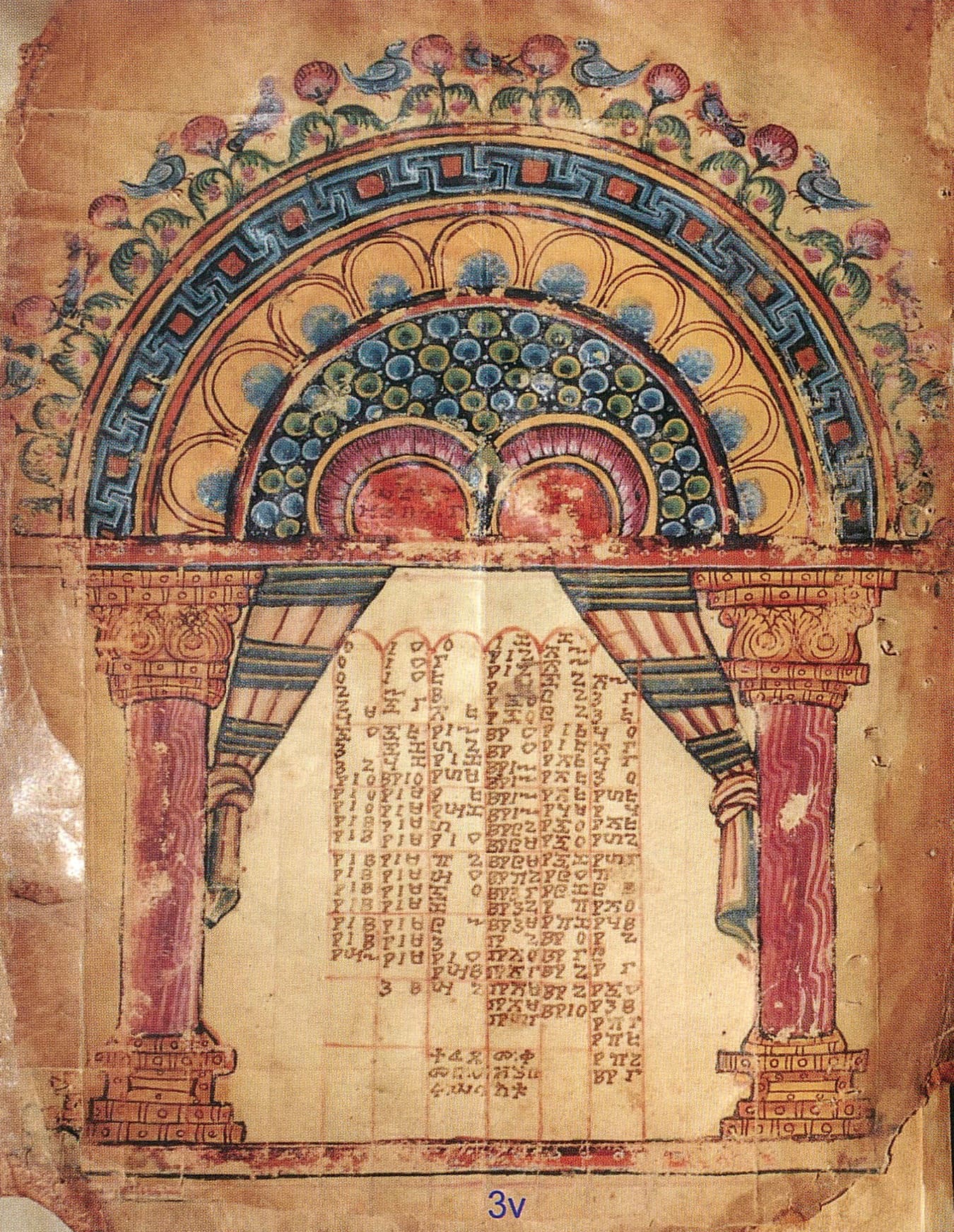
The Garima Gospels are kept at the Monastery of Abba Garima, in the mountains of Tigray at about 7,000 feet. They were long assumed to date from around 1100 A.D. Radiocarbon testing at Oxford instead placed them between about 330 and 650 A.D., which may make them among the earliest illustrated Christian manuscripts in the world.
The result changes our picture of early book painting, and of how Christianity spread into Africa south of the Sahara. Very few Ethiopian manuscripts can be dated before the 12th century, so these Gospels survive from a period that has otherwise left almost no books. Their text is written in Ge’ez, the ancient language of the Church. Apart from a small number of stone inscriptions, they are by far the earliest Ge’ez writings known.
Abba Garima and the tradition of the Gospels
The monastery is named for Abba Garima, one of the holy monks remembered for strengthening the faith in Ethiopia. Tradition holds that he came from Constantinople and arrived in Ethiopia in 494. It also tells that he copied all four Gospels in a single day, and that God delayed the setting of the sun so that he could finish.
How the Gospels became known to scholars
The first report of the Gospels by a Western writer came in 1950 from the British art historian Beatrice Playne. Women are not permitted inside the monastery, so its treasures were carried outside for her to see. She noted illuminated manuscripts whose decorated headings looked Syrian in style.
In the 1960s the French specialist Jules Leroy studied the books. He identified two separate sets of Gospels, now known as Garima I and Garima II, and dated both to around 1100. He found it hard to believe that such books could have reached Ethiopia in the early centuries of Christianity.
The Gospels have never left the monastery. Although they were listed in the catalog of the touring exhibition “African Zion: The Sacred Art of Ethiopia” in 1993 to 1996, they did not travel with it. Because of the monastery’s remote location, few scholars have been able to examine them.
What the radiocarbon dating showed
Jacques Mercier, a French specialist in Ethiopian art, saw the Gospels on several short visits. By then the parchment was very fragile, and small pieces broke away when the books were opened. He took two small loose fragments and arranged for them to be tested at the Oxford University Research Laboratory for Archaeology.
| Sample | Radiocarbon date range |
|---|---|
| Parchment from Garima II | 330–540 A.D. |
| Parchment from another illustrated page | 430–650 A.D. |
Radiocarbon dating gives a range, not an exact year. The midpoints of these two ranges fall close to the time when Abba Garima is said to have arrived. The science cannot prove who made the books, and it says nothing about the miracle of the single day, but it is consistent with the ancient tradition that links the Gospels to him.
The American scholar Marilyn Heldman reached a similar conclusion by another route. Working from photographs, she placed the Gospels in the sixth century.
The books were later conserved by an Anglo-French team sponsored by the Ethiopian Heritage Fund. Conditions were so difficult that the work was done outdoors, with two funeral biers used as tables.
A Possible Gold Mine of the Queen of Sheba
The Queen of Sheba’s visit to King Solomon, and the gold she brought him, are told in the Old Testament (1 Kings 10) and in the Kebra Nagast, the book at the heart of Ethiopia’s royal tradition. The Church and people of Ethiopia have preserved this memory for many centuries.
The British archaeologist Dr. Louise Schofield reported that a local prospector led her to an old mine in northern Tigray, and she proposed that it could have been a source of the queen’s gold. She described finding an inscription in Sabaean inside the mine, and a stele carved with a sun and crescent moon, a symbol of the Sabaean kingdom. She also reported the remains of a temple and a battlefield nearby.
Sheba is often identified with the Sabaean kingdom, which rose about 3,000 years ago around the southern Red Sea and grew wealthy on the trade in spices. Scholars locate its center in Yemen, and its influence reached northern Ethiopia.
This identification of the mine has not been established. A link between any particular site and the Queen of Sheba remains a proposal that needs further excavation and study. What the region does show plainly is a long and rich past: Tigray is home to Aksum, the capital of the ancient kingdom that became Christian in the fourth century, and to the clifftop monastery of Debre Damo.